A people you already know, scattered across five continents
Syrians have been leaving for a hundred and sixty years, and building in every country they reached. Some of the names are famous. Most are not. All of them kept the connection.
Who are the Syrian people? Around 23 million before 2011, predominantly Arab and Arabic-speaking, with substantial Kurdish, Armenian, Circassian, Turkmen, and Assyrian communities. Roughly 6 million left after 2011, adding to a diaspora that began emigrating in the 1860s and now spans Turkey, Europe, the Americas, and the Gulf.
Five times Syrians left in large numbers
Each wave built a different diaspora, in a different place, with a different relationship to home. Understanding which wave someone's family belongs to explains a great deal.
To the Americas
The first and largest voluntary wave, driven by the Mount Lebanon conflict of 1860, Ottoman conscription, and simple economic ambition. Tens of thousands sailed from Beirut for New York, Sao Paulo, Buenos Aires, and Mexico City, most of them from what is now Syria and Lebanon, most registered on arrival as "Turks" or "Syrians" regardless of origin.
Regional displacement
The Arab-Israeli wars reshaped the region and moved populations in both directions. Palestinian refugees arrived in Syria in large numbers, while Syrians from the Golan were displaced internally after 1967, and professional emigration to the Gulf began in earnest.
The professional exodus
Doctors, engineers, and academics left for the Gulf states, Europe, and North America, some for work and some for politics. This is the wave that built the professional Syrian communities in Britain, France, Germany, and the United States.
After Hama
A politically driven emigration following the events in Hama, smaller in number but significant in its effect on diaspora politics, and the origin of many exile communities that would become vocal after 2011.
The largest displacement of the century
Around 6 million people left the country and roughly the same number were displaced inside it. Turkey took the largest share, then Lebanon and Jordan, with Germany receiving the largest number in Europe. This wave transformed the diaspora from a scattered historical population into a defining fact of modern Syrian life.
The map of the diaspora
Figures move constantly as people go home, and different sources count different things: registered refugees, people under temporary protection, and people of Syrian descent are three separate numbers. Each figure below says which it is, and when it was counted.
Turkey
Still the largest Syrian population outside Syria, down from 2.9 million at the end of 2024 as returns accelerated. Concentrated in Istanbul, Gaziantep and the border provinces.
Germany
The largest Syrian community in Europe, with a generation now schooled, qualified and working in German.
Jordan
Registered refugees as of August 2026, down by roughly a third since returns began. Urban communities in Amman and the north, alongside Zaatari.
Lebanon
Registered refugees in January 2026, down from a peak near 1.5 million. Registration closed in 2015, so the number actually present is higher.
Brazil
One of the largest populations of Syrian descent in the world, arrived from the 1890s, now thoroughly Brazilian and thoroughly proud of the origin.
Sweden
Proportionally one of the largest intakes in Europe, with long-established Syriac and Assyrian communities in Sodertalje.
United States
Communities from the 1890s onward in New York, Detroit and Los Angeles, plus arrivals after 2011.
The Gulf states
Long-established professional communities in Saudi Arabia, the UAE, Kuwait and Qatar, some there for generations.
Syrians, and people of Syrian descent, you've heard of
Some are Syrian-born. Others are two or three generations removed and simply carry the origin. We say which is which, because the difference matters.

Steve Jobs
His biological father, Abdulfattah Jandali, was born in Homs and emigrated to the United States to study.
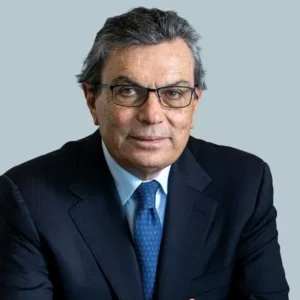
Ayman Asfari
Led the energy services group Petrofac for nearly two decades from London. The foundation he and his wife established supports Syrian civil society.
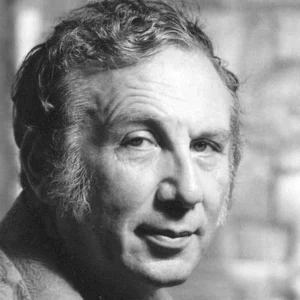
Nizar Qabbani
The most widely read Arab poet of the twentieth century, and a Syrian diplomat for twenty years.
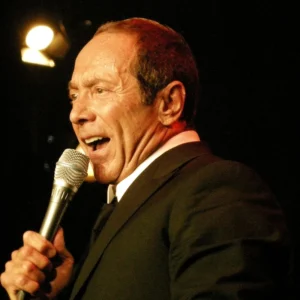
Paul Anka
Born in Ottawa to parents of Syrian and Lebanese origin, and one of the defining songwriters of his era.
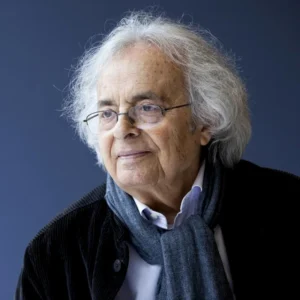
Adonis
The modernist who reinvented Arabic verse, and a perennial Nobel candidate, living in Paris for decades.
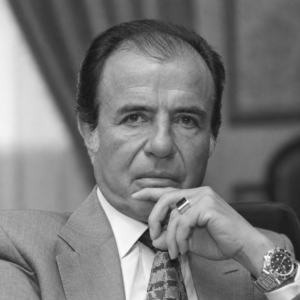
Carlos Menem
President of Argentina from 1989 to 1999, born in La Rioja to Syrian immigrants. He visited Yabrud as head of state.
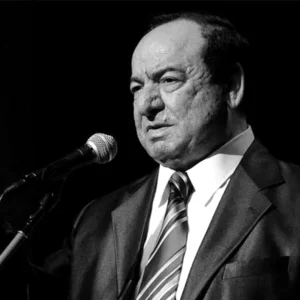
Sabah Fakhri
The voice of the Aleppine tradition, and one of the most recognized singers in the Arab world for half a century.
Famous Syrians
The longer list, with sources, and the ones commonly misattributed.
Since December 2024, people have started going home
More than three million displaced Syrians have gone home since 8 December 2024, by UNHCR's count: over 1.6 million refugees from abroad as of 30 April 2026, alongside around 1.9 million internally displaced people. Many found their neighbourhood standing and their house gone, or the reverse. Some came back to stay. Others came to look, and left again. All of it is true at once.
Who is coming back
Heaviest from the neighbouring countries. By 30 April 2026 UNHCR counted 639,995 returns from Turkey, 630,697 from Lebanon and 284,881 from Jordan. Return from Europe has been slower and more often exploratory.
What they are finding
Reconstruction is uneven and services vary enormously by area. A Norwegian Refugee Council assessment completed in December 2025 found 62 per cent of families surveyed lacked civil identity documents and 61 per cent lacked official proof of property ownership.
The visit-first pattern
A common route is to visit before deciding: see the house, see the city, talk to people who stayed, then go back and think. This site exists partly for that visit.
WHAT'S MADE RETURN POSSIBLE
- The end of compulsory conscription, which kept a generation of men away
- Airports at Damascus and Aleppo operating again
- Border crossings from Lebanon, Jordan, and Turkey functioning
- Visible reconstruction in Aleppo, Homs, and the Damascus suburbs
- A September 2026 law nullifying Assad-era court rulings and restoring confiscated property
WHAT STILL MAKES IT HARD
- Housing destroyed, occupied, or with contested ownership
- Very limited jobs, and an economy still under sanctions pressure
- Schooling gaps for children educated in another language
- Unexploded ordnance in formerly contested areas
- Uncertainty about whether residency abroad can be kept
- Unexploded ordnance, which killed hundreds in the first year after the fall
Who lives in Syria
Syria has never been one thing. The communities below are described as they describe themselves, and the Religion pillar covers each in proper depth.
Arabic-speaking majority
The large majority of Syrians are Arab and Arabic-speaking, spread across every region and every faith.
Kurds
The largest ethnic minority, concentrated in the north and northeast, speaking Kurmanji Kurdish.
Armenians
Long-established communities in Aleppo and Damascus, many descended from survivors of 1915.
Assyrians and Syriacs
Ancient Christian communities of the northeast, with their own language and church traditions.
Circassians and Turkmen
Settled in the nineteenth century and since, with their own languages still spoken in certain villages.
And the faiths
Sunni, Alawite, Christian of many churches, Druze, Ismaili, Twelver Shia, and Yazidi. The Religion pillar covers each.
Quick answers
How many Syrians live abroad?
Roughly 6 million left after 2011, on top of a historical diaspora of several million more by descent, particularly in Brazil, Argentina, and the United States. Totals are contested and changing as people return.
Was Steve Jobs Syrian?
His biological father, Abdulfattah Jandali, was born in Homs. Jobs was adopted at birth and raised in California by Paul and Clara Jobs.
Can I get Syrian citizenship by descent?
Syrian nationality passes through the father, and in some circumstances through the mother. The process for those born abroad runs through consulates and is document-heavy.
Are Syrians returning home?
Yes, in significant numbers since December 2024, mainly from neighboring countries. Return from Europe has been slower and is often exploratory first.