IN PICTURES
Damascus in pictures
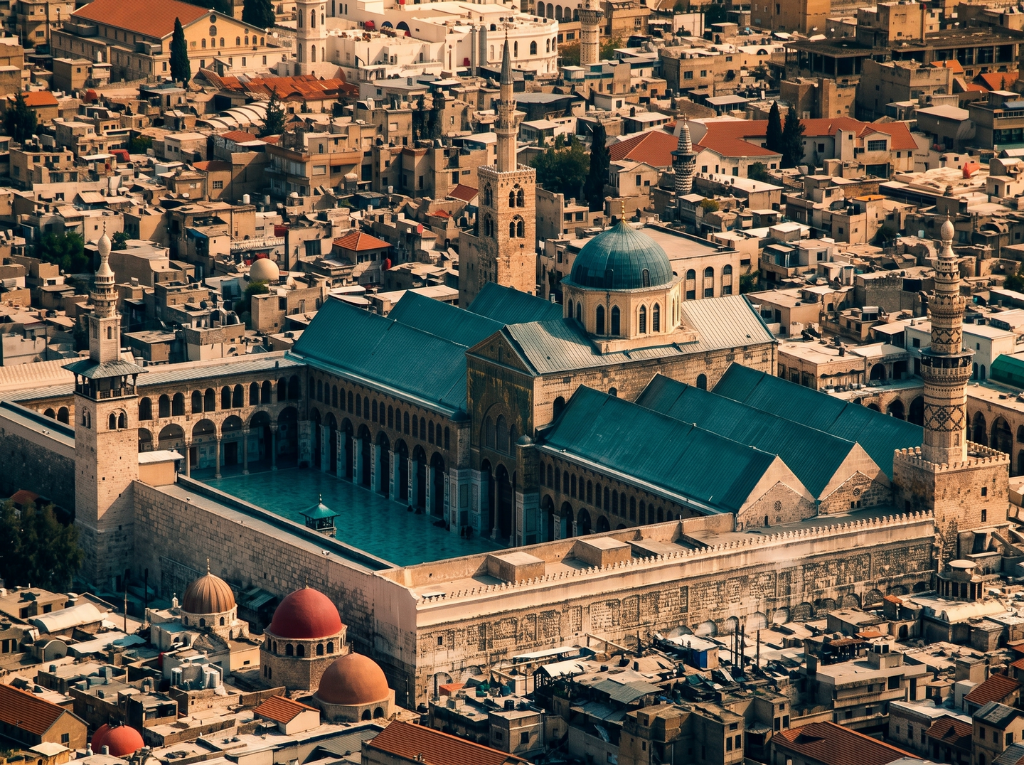
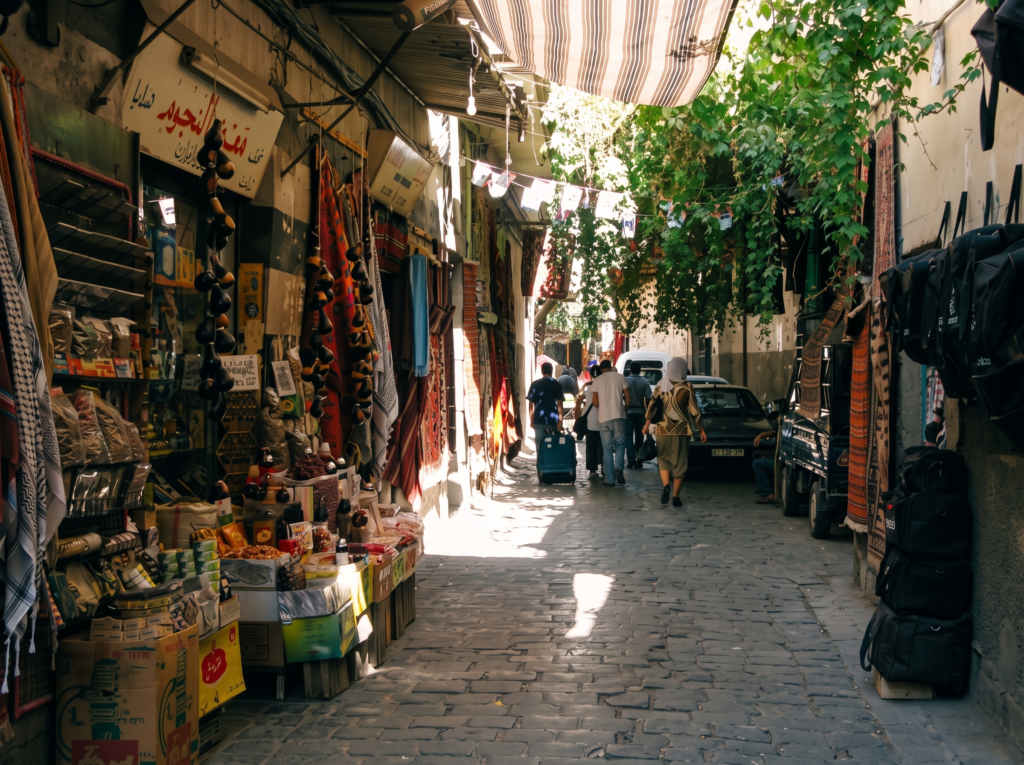
One of the oldest continuously inhabited cities on earth, and the easiest place in Syria to begin.
Is Damascus safe to visit in 2026?
Yes, for most visitors who stay in the Old City and the central districts and travel with a licensed local operator. Ordinary crime is low and the Old City came through the war intact. Most Western governments still advise against all travel, which affects your insurance, and conditions vary by area. Full safety breakdown
People have farmed the Damascus oasis for around eleven thousand years, and the city itself has been lived in without a break for at least three thousand. That is the claim behind the title Damascus is best known for, and it is the reason a walk through the Old City takes you past a Roman street, an eighth-century mosque and an Ottoman merchant’s house within about ten minutes.
Damascus came through the war in far better shape than Aleppo or Homs. The Old City, walled and largely intact, was never the front line, and the suburbs that were hit lie well outside the parts a visitor spends time in. Since December 2024 the city has been noticeably busier: guesthouses reopening inside the walls, more flights into the airport, and Syrians returning from abroad.
Almost everything you will want to see sits inside a walled area you can cross on foot in twenty minutes. The Umayyad Mosque anchors it. Souq al-Hamidiyah runs west from it under a barrel roof punched with bullet holes from a French air raid in 1925, which let through pinpricks of light that people photograph without knowing what made them.
Straight Street, the Roman decumanus, still runs east to west across the quarter, and is the street named in the Book of Acts. Off it, the Christian quarter of Bab Touma and the Jewish quarter hold courtyard houses that have become guesthouses and restaurants. The best of them are invisible from outside: a plain door in a lane opens onto a courtyard with a fountain and a lemon tree.
Three days covers the Old City without rushing. Four lets you add Mount Qasioun for the view over the whole city at dusk, or a half day at the National Museum, which reopened and holds the Ugarit tablets that carry one of the earliest alphabets. Most visitors use Damascus as a base and take day trips out to Maaloula, Bosra or Krak des Chevaliers.
Visitors are in Damascus every week. Most still travel with a licensed local operator, though since January 2025 the visa no longer depends on one and independent travel is possible. The Old City and the central districts are calm, and ordinary crime is low. That said, most Western governments still advise against all travel to Syria, which affects insurance, and conditions outside the centre vary. Read our safety page before you commit to anything.
Built between 705 and 715 on ground that held a Roman temple and then a church. The shrine said to hold the head of John the Baptist is inside, venerated by Muslims and Christians alike.
Read moreA covered market around 600 metres long, running to the mosque gate. The pinpricks of light in the roof are bullet holes from a French air raid in 1925.
The Roman decumanus, still crossing the Old City east to west, and the street named in the Book of Acts. Enter through Bab Sharqi, the one gate that survives from Roman times.
An Ottoman governor's house of 1749, built around shaded courtyards with black basalt and limestone banding. Now the Museum of Arts and Popular Traditions.
Syria's main collection, opened in 1936 behind the reassembled facade of an Umayyad desert palace. The reconstructed Dura-Europos synagogue of 244 CE is the piece to see.
Read moreThe ridge above the city, and the place Damascenes go at dusk. The whole city spreads out below, which is the quickest way to grasp how big it is.
Saladin took it in 1174 and made it his residence. His brother al-Adil rebuilt it completely between 1203 and 1216 to withstand the counterweight trebuchet, and in nine centuries it was stormed only once.
Read moreBuilt in 1196 in the garden beside the Umayyad Mosque. It holds two sarcophagi and one body: the original walnut one, and a marble one sent by Kaiser Wilhelm II in 1898, left empty beside it.
Read moreThe largest khan in the Old City, 2,500 square metres built in 1751 for the Ottoman governor. Caravans from Baghdad, Mosul and Aleppo unloaded here. Its restoration won an Aga Khan Award.
One of the Old City's seven gates, and the way into the quarter where churches, courtyard restaurants and guesthouses sit in lanes barely wide enough for a car.
Read moreFarming villages such as Tell Ramad appear in the plain watered by the Barada, among the earliest anywhere.
The city becomes the capital of an Aramaean kingdom, and appears in the Hebrew Bible as a rival of Israel.
Alexander takes the city, and it passes between Seleucid and Nabataean control over the next three centuries.
Absorbed into the Roman province of Syria. Straight Street, the walls and the grid still follow this plan.
The temple of Jupiter becomes the cathedral of St John the Baptist, whose shrine still stands inside the later mosque.
Damascus falls to the Rashidun armies, and for a generation church and mosque share one enclosure.
Muawiya makes Damascus capital of an empire reaching from Spain to Central Asia. The Great Mosque follows in 705.
Saladin takes Damascus and rules from it. He is buried beside the Umayyad Mosque, where his tomb still stands.
Four centuries as a provincial capital, and the assembly point for the annual pilgrim caravan to Mecca.
The Assad regime falls. The call to prayer from the Umayyad Mosque is among the first images of a free Syria.
Damascus International (DAM) sits 25 km southeast of the centre, about 30 to 45 minutes by road. As of September 2026 roughly 16 airlines serve it, and Syrian Airlines now flies direct to Amsterdam, Copenhagen and Vienna. There are still no direct flights from North America or East Asia.
Latest on routes and airlines →The road from Beirut takes around three hours and is the route many visitors still use. Crossings from Jordan also operate. Border conditions change, so check close to your travel date.
Plan your trip →Most nationalities now collect a visa on arrival at Damascus airport or the land borders, paid in cash US dollars, rather than applying weeks ahead. Two things to check first: that your passport carries no Israeli stamp, which means refused entry, and that your airline will board you on a visa on arrival, since some still insist on seeing one in the passport.
Common questions →Restored historic homes inside the old walls
Modern amenities, walkable to the main sights
Simple, affordable, and close to everything
A cliffside village where Western Aramaic is still spoken at home.
A Roman theatre of black basalt, remarkably complete, in a UNESCO-listed town.
The Crusader castle T.E. Lawrence called the best preserved in the world.
The caravan city between Rome and Persia, damaged in the war and still extraordinary.
33.5138° N, 36.2765° E
Southwestern Syria, on the Barada river, 680 m up and about 250 km from the Mediterranean at Tartus.
Open in mapVisitors travel there every week, many of them with a licensed local operator, though a guide is no longer required for entry. The Old City and central districts are calm and ordinary crime is low. Most Western governments still advise against all travel to Syria, which affects insurance, so read the full safety breakdown before booking.
Three days covers the Old City properly. Four gives you Mount Qasioun and the National Museum, or one day trip out to Maaloula or Bosra.
Most nationalities do, and it is now usually issued on arrival at Damascus airport or at the Lebanese and Jordanian land borders. The fee is paid in cash US dollars and depends on your nationality. Check two things before booking: that your passport shows no Israeli stamp or visa, which means refused entry, and whether your airline will board you without a visa already in the passport.
No. Foreign cards do not work and there are no ATMs available to visitors. Damascus is a cash city for travellers, so bring clean, new US dollars or euros covering the whole trip, plus a buffer.
March to May and September to November, when days are mild. Summer is hot and dry, and winter nights are cold, with occasional snow on Mount Qasioun.
Visas, safety, flights, and a suggested itinerary, all in one place.
Start planning